Category: Nature
Early Saturday morning was just a normal time for most people in the world, but for those in Chile, it could very well have been the worst day of their lives. Not many months have passed since the killer earthquake hit Haiti, and a lot of people the world over still live in anxiety. You can just imagine what our fellowmen from Chile were thinking when they awakened to a rocking world.
The quake that hit Chile was way stronger than the one that hit Haiti – it measured in at 8.8 on the Richter scale. Seismologists classify this as “great” earthquake, capable of incurring tremendous damages. To date, hundreds have been reported dead in Chile, with the numbers expected to rise.
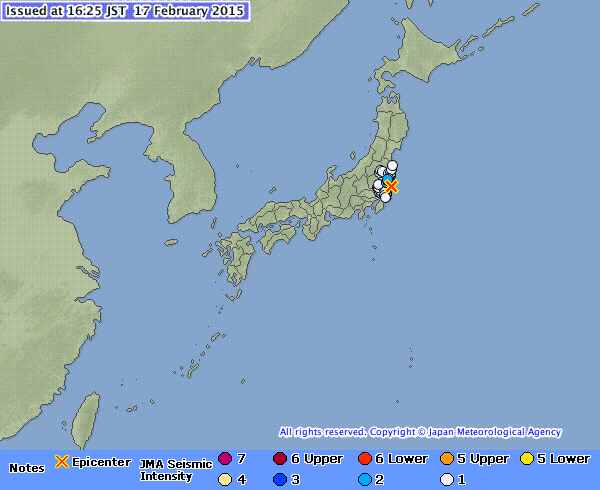
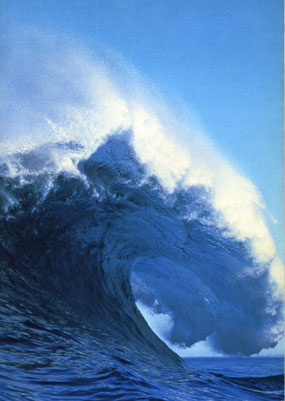
The extent of the effects of this earthquake is supposed to reach far and wide, though. As a matter of fact, a tsunami was triggered by the tremor. AP reports that waves have already reached as far as Russia and Japan on Sunday – a day after the quake hit Chile. The good thing is that the waves were not as huge as was expected. People were already told to evacuate as early as Saturday, and evacuate they did. Perhaps due to the distance, the waves were a “mere” 4-feet high, which, while causing some flooding, did not really cause much damage. The Japanese government has already lifted the tsunami warning.
Most other countries who are in the path of the tsunami have also lifted their warnings.

How was your weekend? The chances are that you fared a thousand times better than the Filipinos who were caught unawares by tropical storm Ondoy (international name Ketsana). The Philippines experiences typhoons on a regular basis, and Filipinos are used to constant rain. As such, Friday night even saw a lot of people out partying and welcoming the weekend.
Saturday morning was a whole different story. People in the Metro Manila area experience rainfall like never before, and the floodwaters rose at an unprecedented rate. Rich or poor, it did not matter – everyone was left at the mercy of strong currents. Even huge houses were not spared, with floodwaters covering most of the edifices.
The weekend was definitely a horrific period of time for countless people in the metro. The news of the disaster has spread all over the world, with most of the attention focused on the metro. What many might not know is that thousands more of people are also in similar situations outside of the capital. In outlying provinces such as Laguna and Bulacan, people remain stranded on their roofs and in areas yet unreached by rescue efforts. Everywhere, people are clamoring for food and water, as well as clothes and practically anything that can help them start over.
There are countless volunteers offering their assistance. The problem is the goods are not nearly enough. If you go to the big supermarkets in Manila, you will see bare shelves. Many say they went shopping to donate the goods.
The bottom line is that these people need help, FAST. Splashpress Media has launched our campaign to help in whatever way we can. If you feel that you want to pitch in, please visit our donation page and read more. The Filipino people will surely appreciate every little bit.
Animals that eat plants are a common sight, but plants eating animals? Well, there is the Venus fly trap. Then there are all those plants in fantasy and science fiction movies. In real life, though, it is rare that we hear about flesh-eating plants.
British botanists Alastair Robinson and Stewart McPherson headed over to the Philippine island of Palawan in 2007 to check out a pitcher plant they heard about from some missionaries. They discovered the plant in Mount Victoria, and published the report earlier this year in the Botanical Journal of Linnean Society.
The plant has been named Nepenthes attenboroughii, in honor of Sir David, the wildlife broadcaster. To this, Sir David replied:
“I was contacted by the team shortly after the discovery and they asked if they could name it after me. I was delighted and told them, ‘Thank you very much’. I’m absolutely flattered. This is a remarkable species the largest of its kind. I’m told it can catch rats then eat them with its digestive enzymes. It’s certainly capable of that.”
Indeed, the pitcher plant is unique in so many ways. More than catching flies and other small insects, it can devour rats! The botanists describe the plant as “immediately distinguishable from other Nepenthes by its great dimensions and trumpet-shaped lower and upper pitchers.” It is also unique in that it is the only member of its genus that “lives” at such a high elevation.
Can you imagine just how much more there is left to discover in the wild?
And I thought that we only had to fear alligators in the Everglades. Apparently, the population of Burmese pythons has reached an unprecedented high. According to wildlife biologists, the population of the pythons has now reached about 150,000!
Where do these pythons come from (as it is highly unlikely that they traveled all the way from Burma)? Apparently, pet owners dump them in the glades once they get tired of them. And since the conditions in the area are conducive to breeding, the snakes have multiplied over the years.
Aside from the fact that pythons are ungainly (at least to the average person), they pose a danger to the natural balance in the Everglades. Pythons eat just about anything and endangered species like the wood stork and Key Largo woodrat are in extreme danger. More so, the bigger snakes can eat larger animals like bobcats and deer and in fact, scientists have already found these animals inside the bellies of captured snakes.
If you think that no one is doing anything about the problem, think again. The Obama administration has already allotted $200 million so far to projects aimed at restoring the glades. While naturalists and environmentalists are rejoicing over this, there are those who think that the money should be spent on other more practical things. On the other hand, the glades and its preservation cannot be given a price, don’t you think?
The next time that you get tired of your pet python, you should think twice about throwing it out in the glades.
It was not long ago that we heard of the “best job in the world.” Sandy beaches –among the best in the world – free housing, blogging, fish feeding, and the works; these are the things that the winner will have to face for six months. No wonder that the server of the organizers got swamped and crashed in the days following the announcement!
This time, they have a different sort of announcement: the winner of the contest!
Ben Southall, 34, is the lucky guy who won. He is a British charity fundraiser who was part of the 16 finalists who entered video clips to get the chance to live in paradise for half a year. And how does the winner feel about this? He is quoted as saying:
To go away now as the island caretaker for Tourism Queensland and the Great Barrier Reef is an extreme honor. I hope I can fill the boots as much as everybody is expecting, my swimming hopefully is up to standard and I look forward to all of the new roles and the responsibilities that the task involves.
Starting July 1, Southall would have the chance to “fill the boots.” He will not be alone in the island, however, as his Canadian girlfriend has been allowed to join him. All I can say is that these two are perhaps the luckiest people in the world right now.
As for the tourism department of Queensland? They are hoping that this stunt will result in dollars – lots of it – spent in tourism in the area.