Category: History


Janjucetus, T-Rex of the Sea

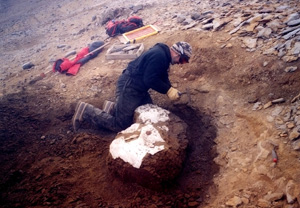
erichfitzgerald_wideweb__470x338,0.jpg

We all know that there were predators on land, some of which were a major threat to their own kind. We knew there were some in the sea as well, after all we have sharks and crocodiles today. Did you ever imagine though that our whales may have evolved from predator so strong, it has now been considered the T-Rex of the Sea?

The find was made in Australia. 25 million year old fossils of an ancient relative of the blue whale, the largest creature to inhabit the earth. Unlike the blue whales however, this ancestor had teeth, very sharp ones. The teeth measure about 3 cms (1.2 inches) in length.

Research has shown these scientists that the fossil is an early type of baleen whale. This type includes the humpback whales, minke whales and the blue whales. The term baleen refers to the comb like plates in their mouth that allows them to filter their food. The only difference is, this ancestor doesn’t even have a baleen.

Erich Fitzgerald of Monash University in Australia says that this whale was actually rather small, measuring only 3.5 meters (11 ft 6 in) in length. He speculates that their food of choice were probably sharks, large fish, or other whales.The fossil was found south-eastern Australia near a town called Jan Juc, earning the fossil the name of Janjucetus (formally known as Janjucetus Hunden). Discovered in 1990 by a teenage surfer, it sat unstudied until Fitzgerald, a graduate researcher saw it on the desk of PhD student.

Hurricane Katrina Unearths Ancient Village From The Time of Christ

Hurricane Katrina admittedly was one of the worst natural disasters ever to have struck the Gulf Coast of the United States, but while builders worked to rebuild a major bridge damaged by the hurricane, they made quite a remarkable discovery.

This discovery was evidence of an ancient village, which possibly once thrived during the time of Christ. Archeologists believe that the reason the site was left uncovered for 2,000 years was owing to its somewhat bland appearance, which probably deceived early settlers into believing it was nothing but a rock formation. In more recent times, the area was hidden by large oak trees and smart beach houses, which were torn away during the hurricane.

Archeologists were thrilled to have discovered artifacts like spearheads and pottery, suggesting that as many as 400 ancient Indians (whose tribe is still unknown) could have lived in the village between 200 B.C. and 400 A.D. There is also reason to believe that there are several small pockets or vaults serving as burial areas within a mound, where senior members of the village, as well as their treasures are buried.

Right now, the dig is on private property, meaning that it is ?off limits? to outsiders. However, if any human remains are found, Federal law states that the ?sacred? discovery be returned to whatever Indian tribe may have occupied the village at that time.

Welcome To The News Blog!

Blogging on the interesting bits of today’s news.

Search


Resources

Sponsors


US Web Hosting

  • Web Hosting Reviews